
What's New
Tackling Extreme Weather — DSD Rolls Out Proactive Measures for Effective Flood Management
13 August 2026
Extreme weather continues to bring more frequent and intense rainstorms to the city. The rainy season this year has been exceptionally wet. As of 13 August, the accumulative rainfall has exceeded 2,100 mm, approaching 90% of the annual average of about 2,400 mm. In July alone, the total rainfall reached 790.3 mm making the second-highest July since record began in 1884. Year to date, Hong Kong has experienced 3 Black Rainstorm, 9 Red Rainstorm, 34 Amber Rainstorm, and an Increasing Gale Or Storm Signal No.9.
Steadfast Duty, Swift Response, Speedy Recovery
In response to flooding risks, the Drainage Services Department (DSD) has rolled out comprehensive reinforcement measures and continued to upgrade its emergency response capabilities. Prior to the typhoon and rainy season, the DSD has completed inspections and clearance works at around 240 pre-identified locations prone to blockages across Hong Kong, and implemented special measures to critical conditions. To date, the Emergency Control Centre has been activated 14 times, approaching the total of 15 activations recorded last year. Emergency response teams carried out over 2,700 deployments, while pumping robot teams carried out around 250 deployments, accumulating over 16,800 man-hours in total, with as much as 40% of these deployments concentrated in the exceptionally rainy month of July. Of the 72 confirmed flooding cases recorded year to date, the majority were resolved within one to two hours, significantly minimised disruption to public daily life and traffic.
Innovative Technologies Enhance Response Efficiency
The DSD actively employs innovative technologies to strengthen its emergency response, early warning and on-site operational capabilities. For example, the DSD's Mosaic Model Map (M³) system helps us to conduct flood risk assessments ahead of typhoons and rainstorms. Taking Super Typhoon Noul as an example, the system identified areas with a higher possibility of serious flooding, including Shek Wu Wai, Fan Kam Road and Ping Che. The DSD then made preventive deployments by pre-dispatching powerful pumping robots to nearby locations, enabling swift action when flooding occurred and expediting the recovery of affected communities. The DSD also utilises the Artificial Intelligence Flood Monitoring System to collect images from road closed-circuit television (CCTV) cameras for flooding detection and real-time alerts, facilitating the rapid dispatch of emergency response teams.
This year, the DSD has launched an innovative flood prevention trial project to install smart drainage devices at low-lying locations of the New Territories. The device equipped with solar-powered remote control, real-time water level monitoring sensors, drainage pumps and remote surveillance cameras. When waterlogging occurs on the road surface, alerts will be triggered and the device will automatically pump stagnant water into nearby drainage. The device at Wing Ping Tsuen Road, near the San Tin Post Office, has been in operation since the start of this rainy season, and may be extended to other locations when necessary.
Strengthening Flood Prevention in New Territories Villages and Cross-departmental Collaboration
To address the flooding risks in low-lying areas of New Territories villages, the DSD is undertaking a series of short and medium term improvement measures. Short-term measures include widening and dredging works along Ping Yuen River in Ping Che and its upstream tributaries, as well as river bank reinforcement. Meanwhile, two super powerful pumping vehicles have been stationed near Ping Che Road and at Lei Uk Tsuen. When the river level exceeded its threshold, these vehicles could be operated prior to the arrival of rainstorms. For medium-term measures, the DSD is constructing a stormwater storage tank with a capacity of 2,000 cubic metres near Lei Uk Tsuen in Ping Che, equipped with a powerful pumping system and pressurised discharge pipes to discharge rainwater to wider downstream channels. The works are expected to be completed in the second half of this year. Upon completion, the flood retention and discharge capacity of the upstream section of Ping Yuen River in Ta Kwu Ling will be significantly enhanced.
In terms of inter-departmental and community collaboration, the DSD has established a close coordination mechanism with the Highways Department (HyD) for comprehensive deployment in response to the rainy season and extreme weather. The DSD also proactively liaises with estate management companies to provide professional technical advice on flood prevention for underground car parks and basement facilities.
The DSD will continue to uphold its strategy of "advanced emergency preparedness, enhanced early warning, decisive emergency response and speedy recovery". By leveraging advanced technologies and collaborating closely with other government departments and stakeholders the DSD enhancing Hong Kong's flood management capability remains committed to safeguarding public safety.
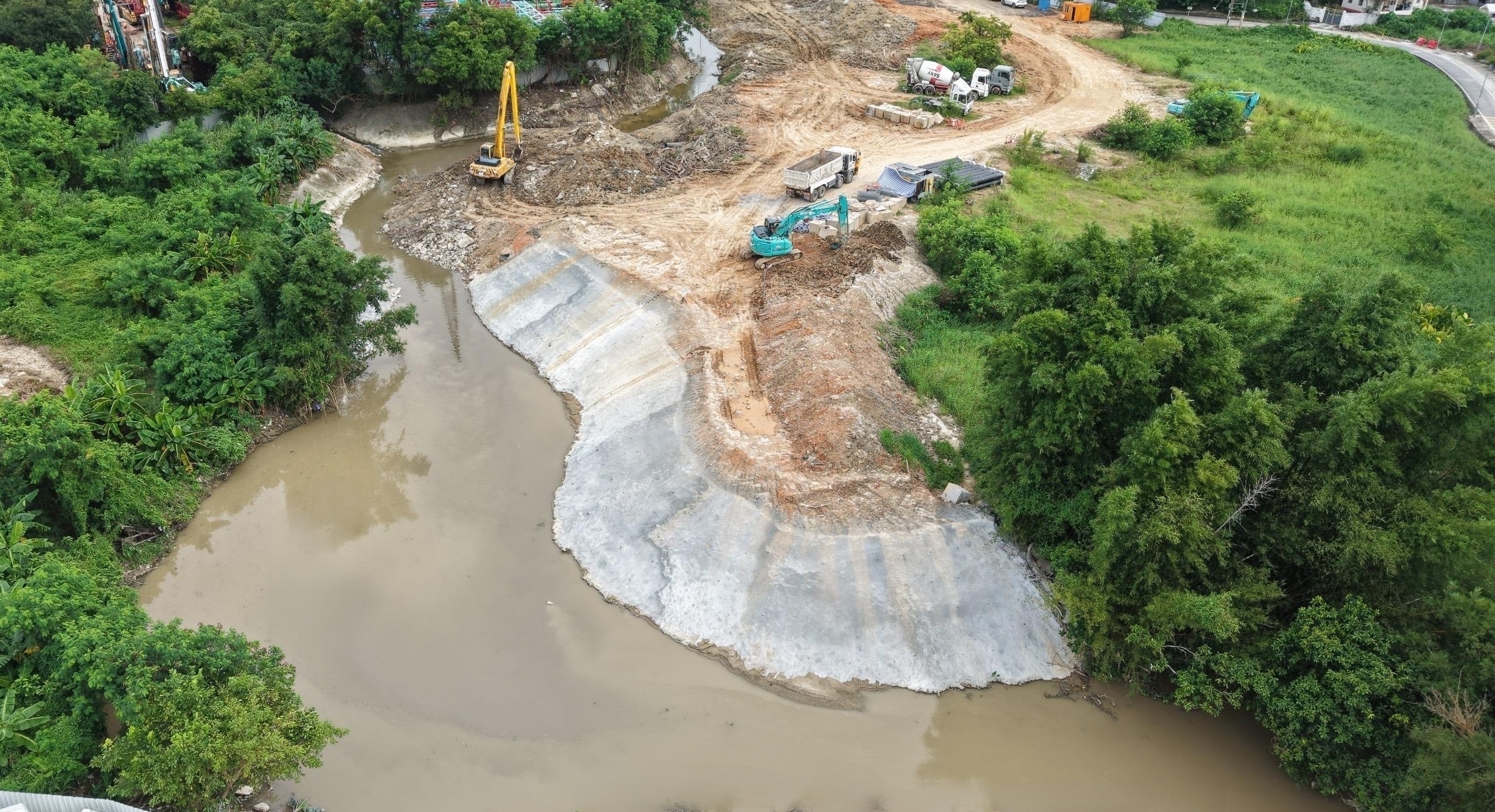
DSD carried out widening and dredging works along the upstream tributaries of Ping Yuen River in Ping Che.
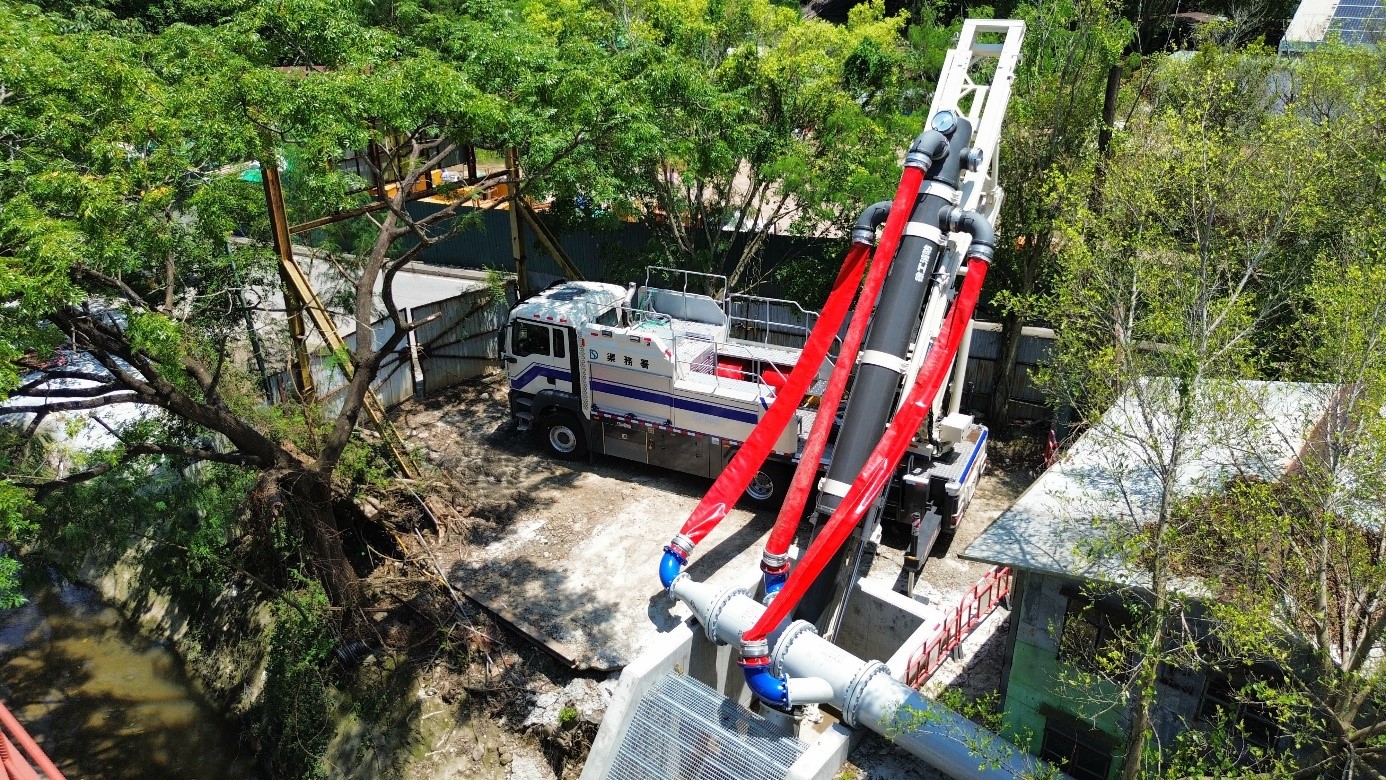
A super powerful pumping vehicle with a maximum pumping capacity of 5,000 cubic metres per hour has been deployed near Ping Che Road since early July. Its pumping capacity is equivalent to drain a standard swimming pool in approximately half an hour.
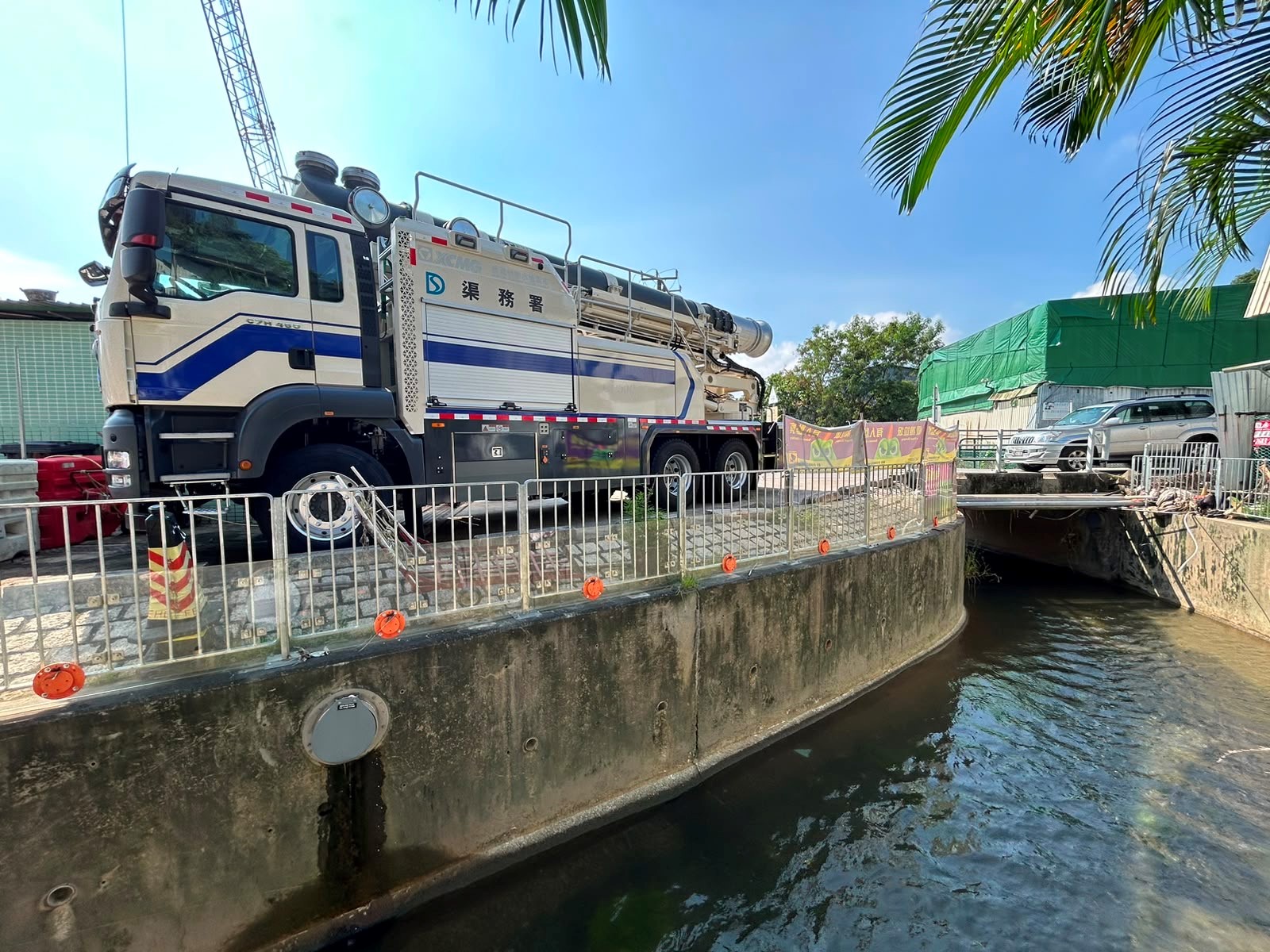
Another super powerful pumping vehicle has been deployed at Lei Uk Tsuen in Ping Che since early July.
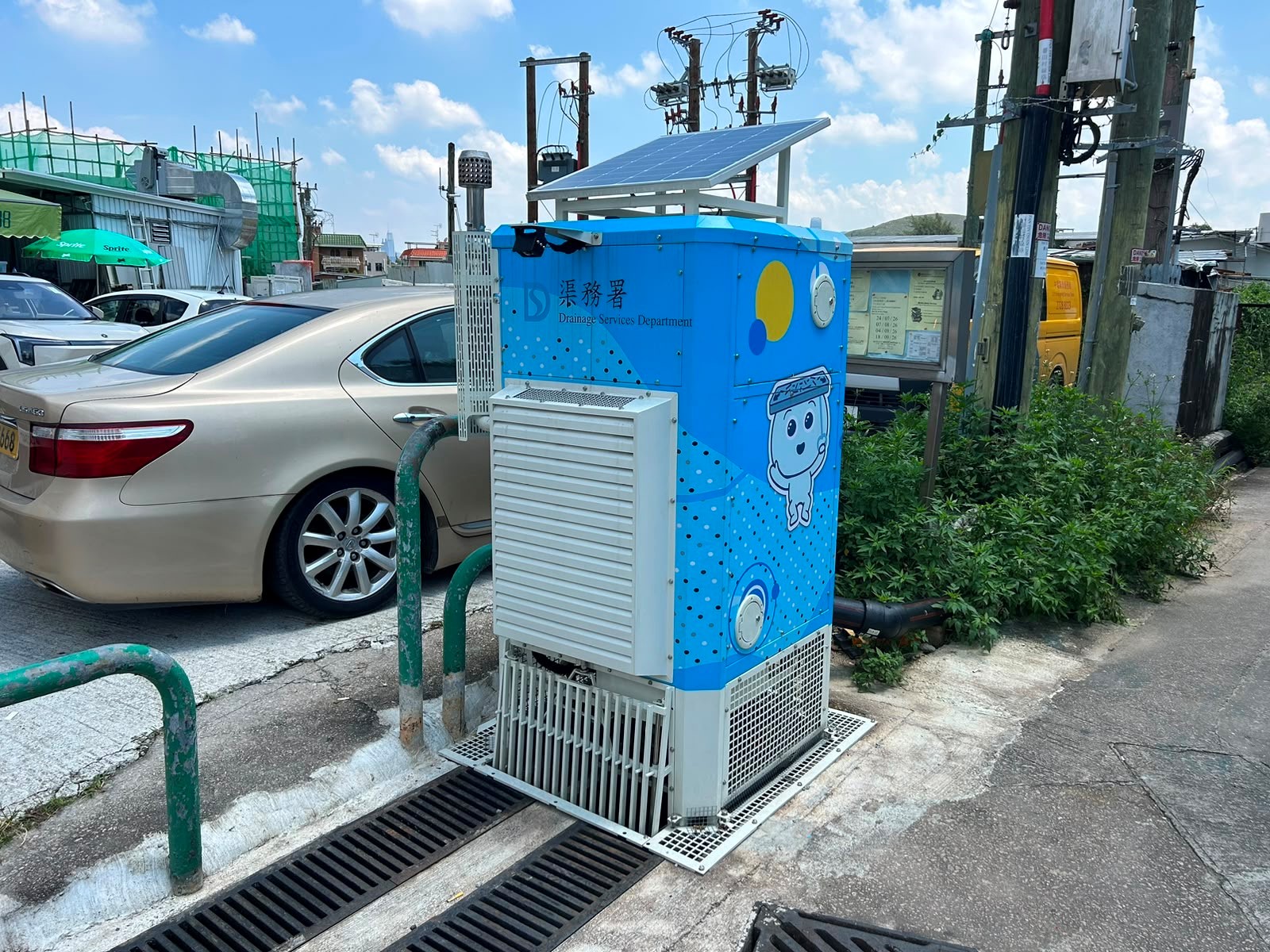
The smart drainage device near San Tin Post Office on Wing Ping Tsuen Road, San Tin, has been put into operation before rainy season this year.
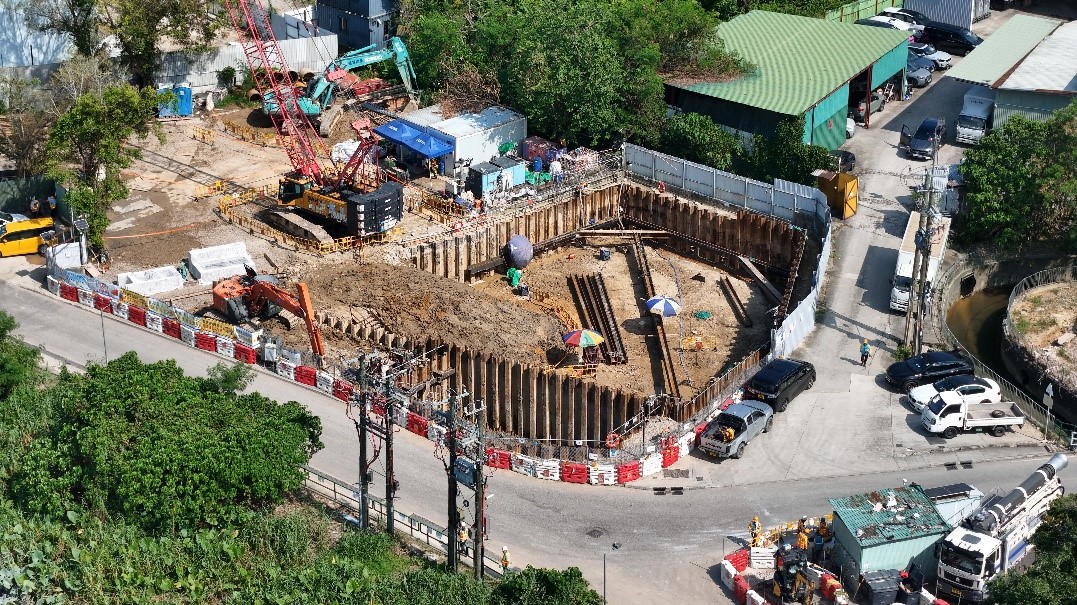
The DSD is currently constructing a flood retention pond with a capacity of 2,000 cubic metres near Lei Uk Tsuen alongside Ping Che Road in Ta Kwu Ling.