
Reporting Scope and Boundary
Reporting Scope and Boundary
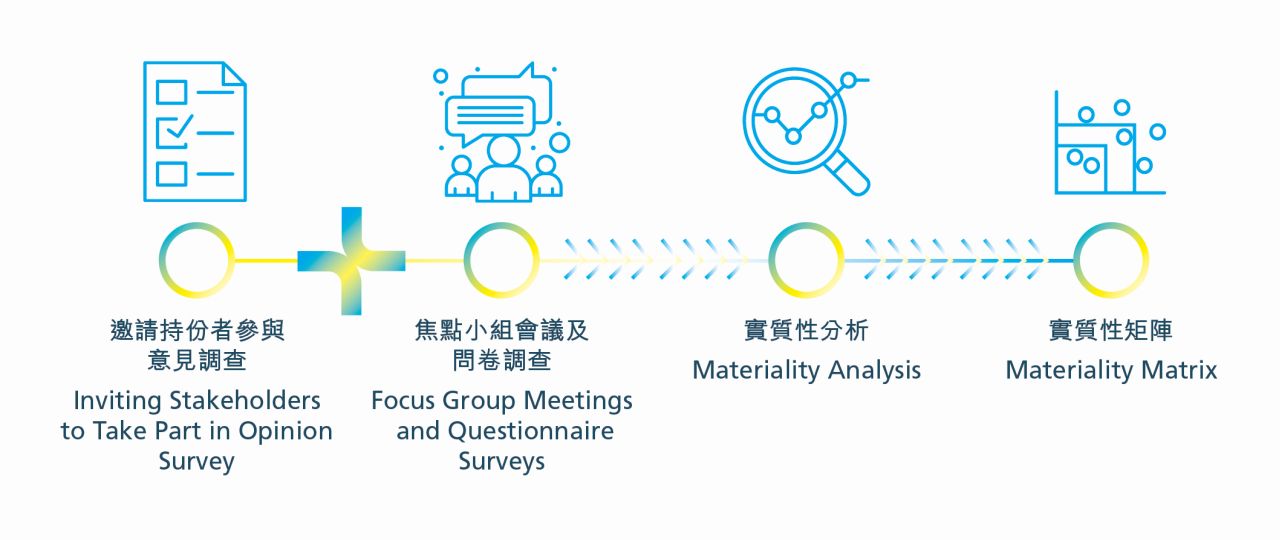
The DSD conducts a comprehensive materiality assessment every year to define the scope and boundaries of our sustainability reports, and to enhance focus and relevance of the report content. Conducted with support from an independent consultant, the materiality assessment is based on the GRI Standards to identify the material economic, environmental and social topics that pose greater impacts on the DSD and its stakeholders. The materiality assessment for this Report comprises the following three major components:
Inviting Stakeholders to Take Part in Opinion Survey
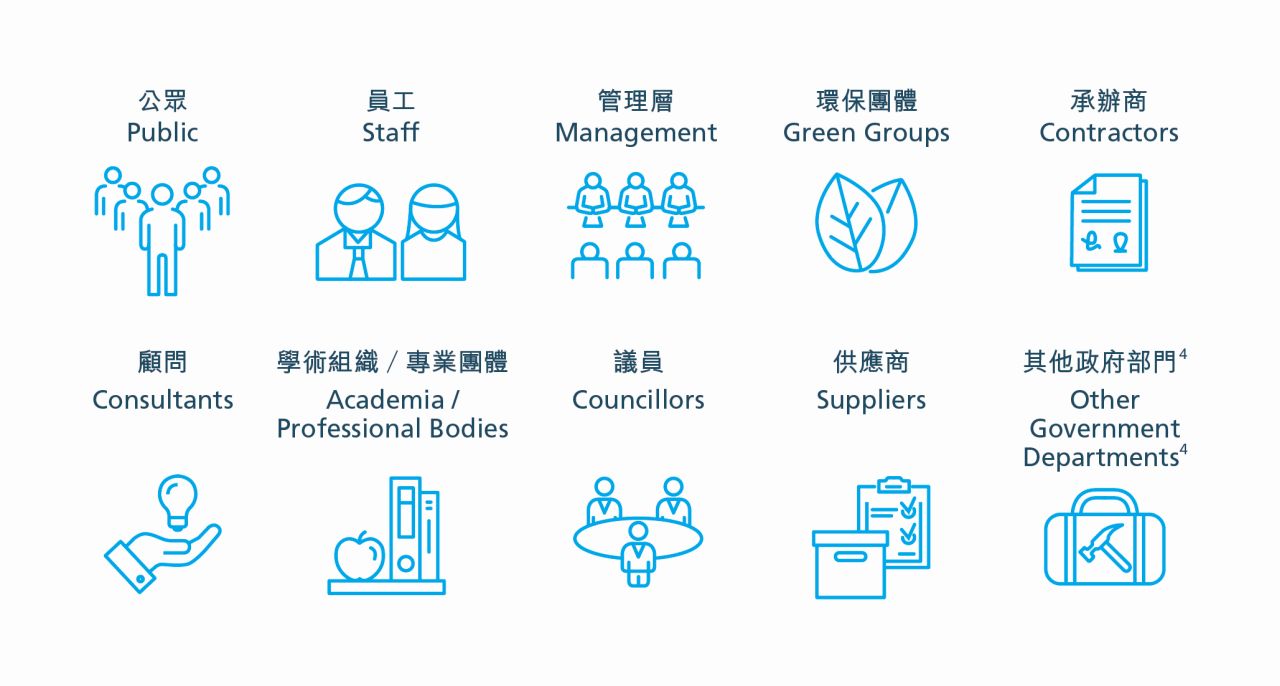
Stakeholder engagement gives us insights into the materiality of various sustainability topics. To identify topics of greatest concern to stakeholders and to gauge their views, we invited stakeholder groups who have significant impacts on the DSD's operations or could be significantly affected by our operations to take part in focus group meetings and questionnaire surveys. These stakeholder groups include:
Focus Group Meetings and Questionnaire Surveys
We engaged stakeholders in focus group meetings and questionnaire surveys to solicit their views on sustainability topics relevant to the nature of the DSD's operations. Covering four major aspects, these topics include social responsibility and human rights protection, staff welfare and development, environmental protection, and operation. An independent consultant was commissioned to organise focus group meetings and questionnaire surveys in May and June 2020 to collect feedback from 526 stakeholders (including 441 external and 85 internal stakeholders). These exchanges shed light on stakeholders' level of concern towards relevant issues and provided comments and suggestions on the sustainability performance of the DSD. In addition to launching stakeholder engagement activities during the preparation of this Report, we maintain close communication with all stakeholders in the course of daily operation. For details, please refer to Chapter 7—Stakeholder Engagement.
Materiality Analysis
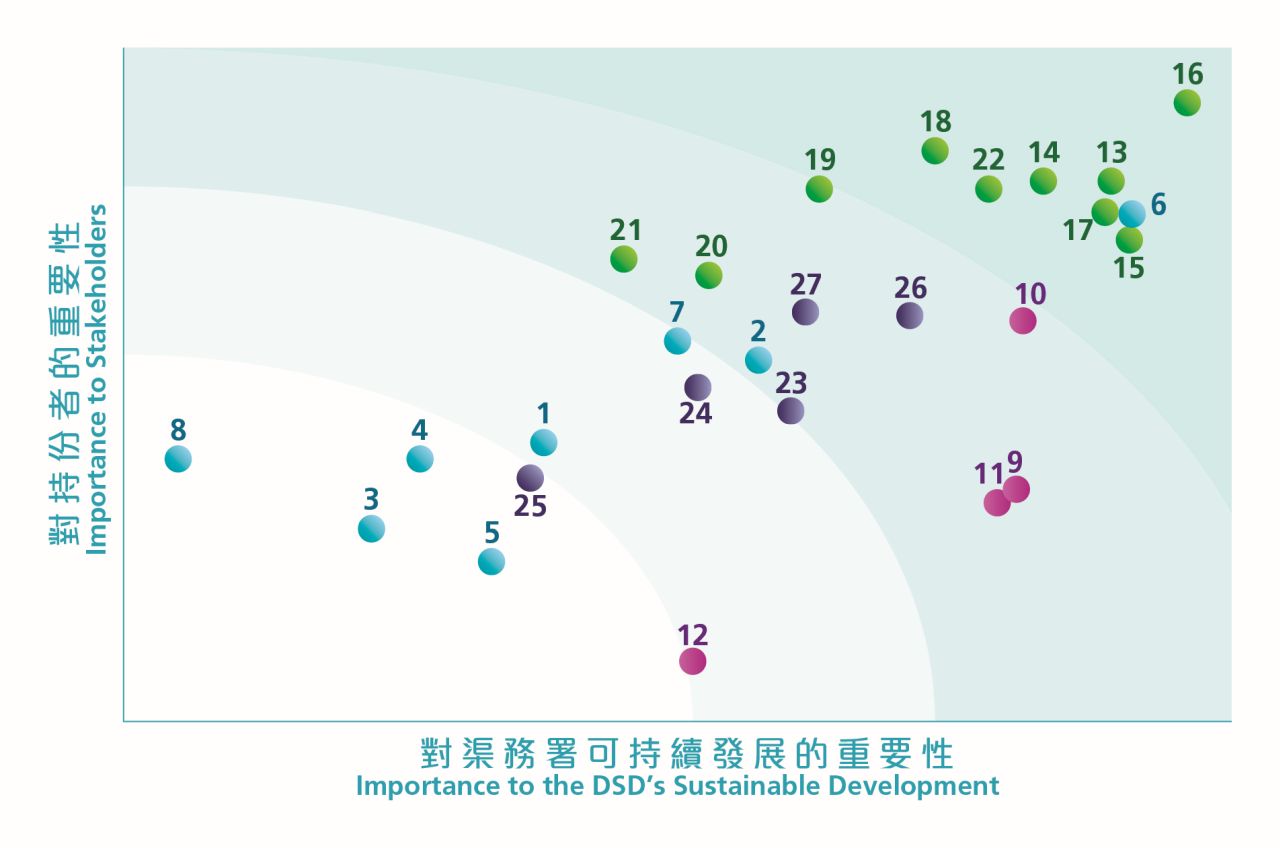
To analyse the importance of various sustainability topics to stakeholders and the DSD's sustainable development, we formulated a materiality matrix based on the results of focus group meetings and questionnaire surveys. Identified material topics are prioritised to define the scope and boundaries of this Report.
Materiality Matrix
Importance of identified topics to stakeholders and the DSD's sustainable development is presented in the form of a materiality matrix. The more important material topics are presented in the top right corner of the matrix.
Social Responsibility and Human Rights Protection
- Anti-corruption
- Social-economic Compliance
- Non-discrimination
- Collective Bargaining Rights
- Respecting Indigenous Rights
- Reporting on Sustainable Development Agenda
- Grievance Mechanism
- Prevention of Forced or Compulsory Labour
Staff Welfare and Development
- Employee Training and Education
- Occupational Safety and Health
- Internal Communication Channel
- Employment Policy and Employee Ratio
Environmental Protection
- Environmental Compliance
- Ecological Conservation
- Energy Management
- Effluent and Waste Treatment
- Odour Control
- Water Resources Management
- Air Emissions
- Use of Materials
- Supplier Environmental Assessment
- Climate Change Mitigation and Adaptation
Operation
- Economic Performance
- Procurement Policy
- Indirect Economic Impacts
- Service Quality Standards
- Transparency on Public Funds and Assets Management
Based on the findings of the materiality analysis as well as recommendations from the senior management of the DSD and the Taskforce on Sustainability Reporting, 23 materiality issues were prioritised this reporting period as material for the DSD to address and report on. As compared with the previous sustainability report, five topics of concern to stakeholders have been added to this Report: grievance mechanism, use of materials, supplier environmental assessment, economic performance and indirect economic impacts. Concluding the views of all stakeholders, we note that all stakeholder groups are highly concerned about the environmental performance of the DSD. In particular, effluent and waste treatment, environmental compliance, ecological conservation, odour control, water resources management as well as climate change mitigation and adaptation are top environmental concerns. In addition to disclosing relevant information in this Report, the DSD maintains close communication with stakeholders in the course of daily operation to ensure prompt response to all concerns and comments.
Material topics and boundaries of this Report are tabulated below:
|
Material Topics |
Topic Boundaries |
|
|---|---|---|
|
Inside the DSD |
Outside the DSD |
|
|
Anti-corruption |
✔ |
✔ |
|
Social-economic Compliance |
✔ |
✔ |
|
Reporting on Sustainable Development Agenda |
✔ |
✔ |
|
Grievance Mechanism |
✔ |
|
|
Employee Training and Education |
✔ |
✔ |
|
Occupational Safety and Health |
✔ |
✔ |
|
Internal Communication Channel |
✔ |
✔ |
|
Employment Policy and Employee Ratio |
✔ |
|
|
Environmental Compliance |
✔ |
✔ |
|
Ecological Conservation |
✔ |
✔ |
|
Energy Management |
✔ |
✔ |
|
Effluent and Waste Treatment |
✔ |
✔ |
|
Odour Control |
✔ |
✔ |
|
Water Resources Management |
✔ |
✔ |
|
Air Emissions |
✔ |
✔ |
|
Use of Materials |
✔ |
✔ |
|
Supplier Environmental Assessment |
✔ |
✔ |
|
Climate Change Mitigation and Adaptation |
✔ |
✔ |
|
Economic Performance |
✔ |
|
|
Procurement Policy |
✔ |
✔ |
|
Indirect Economic Impacts |
✔ |
|
|
Service Quality Standards |
✔ |
✔ |
|
Transparency on Public Funds and Assets Management |
✔ |
|