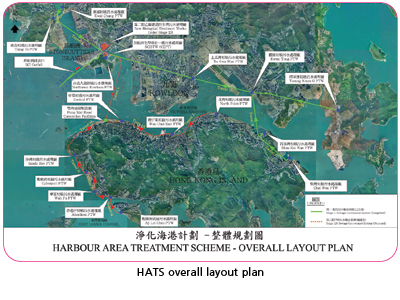
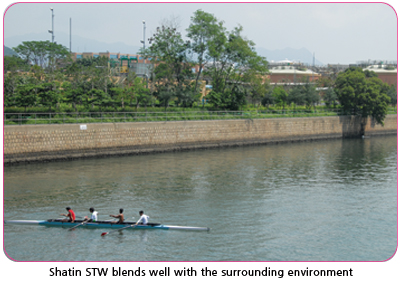
Overview HATS is a major sewerage infrastructure in Hong Kong. The commissioning of HATS Stage 1 in December 2001, handling about 75 per cent of the sewage arising from urban areas around the Victoria Harbour, has brought significant improvement to water quality of the eastern and central part of our harbour. Disinfection facilities are being constructed since April 2008 at Stonecutters Island STW for completion in end 2009. The remaining 25 per cent of sewage from the catchment will be chemically treated with further improvement to the water quality in Victoria Harbour after the commissioning of HATS Stage 2A in 2014-15. Apart from HATS, there are other upgrading works being carried out at major STWs. These include the Sha Tin STW Stage 3 remaining works, the Shek Wu Hui and Tai Po STW upgrading works. |
||||||||||
|
||||||||||
|
||||||||||
Sewage Treatment and Sewerage System We are also maintaining a sewerage network of over 1,600 km. As sewers are susceptible to blockage by grease and solids in the sewage, we have implemented a preventive maintenance programme to ensure the sewers are functioning properly. In 2008-09, 17,095 sections of blocked drains were cleared and a total volume of 3,566 m3 of silt was removed from the sewers. |
||||||||||
|
||||||||||
 |
||||||||||
Upgrading of Pillar Point STW The scope of the proposed upgrading works includes (i) upgrading of the sewage treatment level from preliminary treatment to CEPT with ultraviolet disinfection; (ii) expansion of the treatment capacity from 215,000 m3 per day to 241,000 m3 per day; and (iii) provision of new reception and treatment facilities to cater for domestic liquid waste (septic waste) of 1,200 m3 per day. On commissioning of the upgraded Pillar Point STW in 2013, pollution loads to the north-western waters will be reduced bringing about improvement to the water quality of the receiving water body. In early 2009, we invited three prequalified tenderers to submit tenders for the DBO Contract. The tender exercise is on-going with a view to commencing the DBO Contract in mid 2010. The estimated capital value of the proposed upgrading works is about $1.4 billion with an annual operational cost of about $90 million. |
||||||||||
|
||||||||||
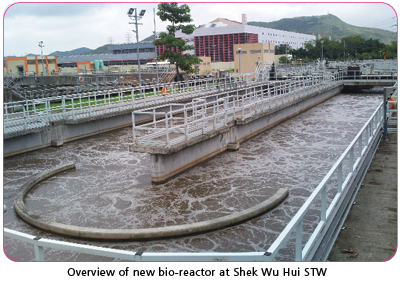
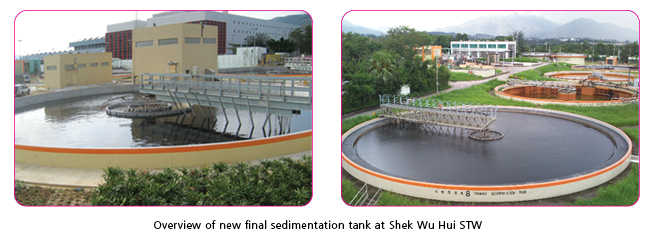
| Expansion Works at Shek Wu Hui STW Shek Wu Hui STW is a secondary treatment plant located in Sheung Shui and has a design capacity of 80,000 m3 per day. It provides treatment to the sewage generated from Fanling and Sheung Shui areas before discharging the treated effluent into Deep Bay through River Indus and Shenzhen River. The plant involves primary treatment (i.e. screening and sedimentation) plus biological process (i.e. activated sludge treatment process) to remove suspended solids, carbonaceous and nitrogenous substances. To cope with the increasing sewage flows and loads as a result of the population growth in Fanling and Sheung Shui and the extension of sewerage system to unsewered areas, expansion works to increase treatment capacity of Shek Wu Hui STW to 93,000 m3 per day commenced in September 2005. The expansion works involving modification, reconstruction and addition of sewage and sludge treatment facilities were completed and commissioned in February 2009. After expansion, Shek Wu Hui STW is now capable of serving a population of 300,000. |
||||||||||
|
||||||||||
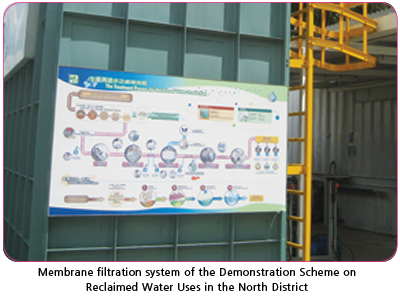
| In addition to the expansion works, DSD has assisted EPD in a two-year trial completed in late 2008 on the use of reclaimed water, named as “Demonstration Scheme on Reclaimed Water Uses” in the North District. At the trial, membrane filtration, a state-of-the-art advanced treatment technology was employed to polish the secondary effluent before supplying it to schools, a home for the aged and a village house that voluntarily participated in the demonstration scheme for toilet flushing, irrigation and other non-potable uses. | ||||||||||
|
||||||||||
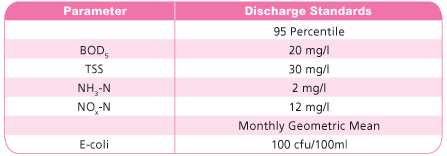
| At present, the treated effluent standard of Shek Wu Hui STW is among the highest in Hong Kong. | ||||||||||
|
||||||||||
|
||||||||||
 |
||||||||||
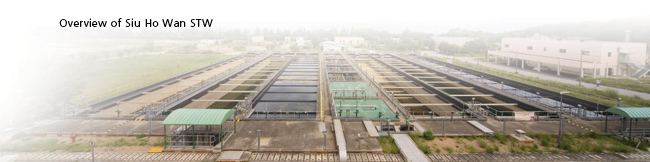
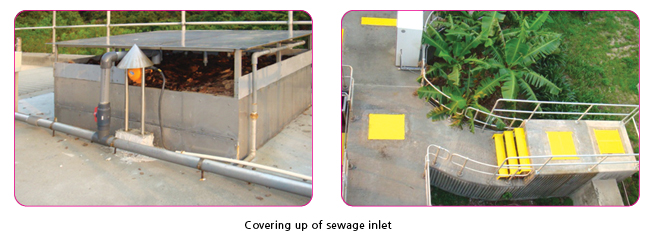
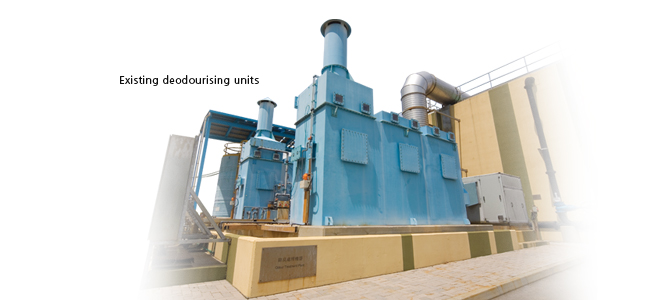
Odour Management at Siu Ho Wan STW Odour comes with sewage and odour management is one of our prime concerns. Among various odourous compounds, the rotten egg smell of hydrogen sulfide (H2S) is the most common one. After the CEPT process commenced, we noted that the odour level at the plant was higher than expected. We quickly investigated the matter and put in hand measures to address the issue. Our investigation revealed that the incoming sewage from Tung Chung was highly septic and odourous compared with the designed flow. A likely reason is the slower than expected population growth in Tung Chung leading to the relatively smaller volume of sewage flow and thus longer travelling time for sewage to reach Siu Ho Wan STW. To address the odour issue, we devised improvement measures firstly to suppress the generation of odourous gas and secondly to control the release of odourous gas from different odour sources during various stage of the treatment operation. The following quick-fix mitigation measures were implemented gradually since 2007 and were in force in 2008-2009-
The following additional odour abatement works are also being implemented for completion by end 2009-
In addition, an automatic hydrogen sulphide monitoring system is now being installed in the STW to record the wind direction and odour levels at various points in the plant round-the-clock. We will continue to monitor the overall odour situation of the STW and will refine the odour management plan where appropriate. |
||||||||||
|
||||||||||
|
||||||||||
 |
||||||||||
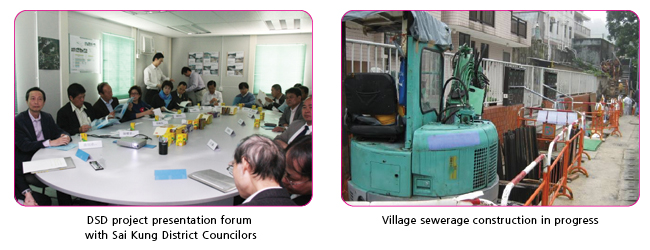
Village Sewerage Programme There are about 900 villages in Hong Kong and most of them are not sewered. Under the village sewerage programme. DSD will gradually extend the public sewerage to these villages. Up to April 2009, DSD has already provided public sewerage to about 120 villages in Sai Kung, Shatin, Tai Po, NT North and Yuen Long districts, and sewerage projects for over 300 villages in various districts of NT are under various stages of planning, design or construction. |
||||||||||
|
||||||||||
|
||||||||||
| During construction, DSD endeavours to extend the public sewerage as far as possible to the lot boundary of every village house to facilitate connection by the private sewer. To achieve this, DSD has to maintain close liaison with the concerned village representatives and residents through different channels such as meetings, site inspections etc. We also consult the district councils, local interest groups and rural committees on respective village sewerage projects. We are striving to provide quality services to the NT residents through collection of views from all walks of life. | ||||||||||
| Environmental Performance Target The beneficial effect of a sewage treatment plant on the environment is best measured by the amount of pollutants it removed and the quality of its treated effluent. To ensure the proper operation of a sewage treatment plant, its effluent quality is regulated through a discharge licensing system. In the discharge license, discharge conditions of the treated effluent are set by the EPD, examples of which include the limits for total suspended solids, 5-day biochemical oxygen demand, ammonia nitrogen, total nitrogen and E. coli count in the treated effluent. |
||||||||||
|
||||||||||
The environmental performance target for DSD-operated sewage treatment plants is to achieve a compliance rate of 95 per cent in all samples tested under the self-monitoring scheme specified in the discharge license conditions. This is also the performance target in the design for most sewage treatment plants of the Department. In 2008-09, DSD handled 991 million m3 of sewage, 294,600 tonnes of sludge and removed 117,000 and 147,000 tones of biochemical oxygen demand and suspended solids respectively from sewage. Based on 13,505 samples taken, a compliance record of 99.8 per cent was achieved, far exceeding the compliance target of 95 per cent. The results reflect the fruitful effort of the operators and the level of treatment achieved. |
||||||||||
|
||||||||||